
Name-Based Sedgwick County Case Searches
Kansas CaseSearch is the public way into Kansas district and appellate case information. Its name query lives inside a structured form. That differs from a free sweep of every court record on file. To use it, accept the terms. Keep Court set to District. Pick Party Name, enter a focused term, and select Sedgwick. The form also asks for a human check before the Search button wakes up.
- Open the official Kansas CaseSearch portal and accept its terms.
- Choose District, Party Name, and Sedgwick County.
- Enter a narrow term and add Case Type or file-date limits only if useful.
- Complete the human check, search, and open a plausible result.
- Reset the form before trying a different mode.
| Control | Type | Required | Use |
|---|---|---|---|
| Terms | Modal | Yes | Accept permits use of the public form. |
| Court | Dropdown | Contextual | District or the separate Appellate path. |
| Search Type | Dropdown | Yes | Case Number, Party Name, Business Name, Party As Business Name, or Citation Number. |
| Search Term | Text | Yes | Interpreted according to the selected type. |
| County | Dropdown | District search | Select Sedgwick. |
| Additional Filters | Expandable | No | Case Type, DOB, and File Date From or To. |
| Human check | Challenge | Yes | Enables Search. |
Five Routes Into a Sedgwick County Docket
Search Type is a routing decision, not a formality. Party Name will not return the same rows as Business Name or Party As Business Name. Citation Number stands apart too. Let the identifier printed on the court paper drive your choice, and save name queries for when nothing better exists.
Case Number aims at the assigned identifier and usually gives the narrowest result. Party Name looks for a person named in the available public information, while Business Name uses the mode built for organizations. A fourth option, Party As Business Name, can surface matches the others miss. Citation Number works best once a district citation has entered the state system.
A blank result is not proof that no file exists; restrictions, conversion, court level, or a wrong search mode can explain it.
Sedgwick County Case Number Searches
A current district case number opens with a county code. Then come the year and a category tag. You will see patterns like SG-YYYY-CR-NNNNNN, SG-YYYY-CV-NNNNNN, SG-YYYY-LM-NNNNNN, and SG-YYYY-TR-NNNNNN. SG marks Sedgwick. The letters CR, CV, LM, and TR stand for criminal, regular civil, limited civil, and traffic. Older reports sometimes print the year first, so copy punctuation straight from the source document. Searching by number sidesteps the mix-ups that similar names invite. A municipal number from Wichita, Derby, Haysville, Park City, or Bel Aire belongs with that city clerk first. If a municipal appeal lands in the Eighteenth Judicial District, it opens a separate state case record.
Sedgwick County Case Type and Date Filters
More controls let you filter by Criminal, Civil, Family, or Probate or Mental Health. Note that File Date From and File Date To concern the filing, not a hearing. A date printed on a notice may point to a future setting. The filing date marks the day the case began. For actual settings, rely on the case view, the DC18 calendars, or the clerk. A 2025 Kansas Smart Search update described wider filters for location, status, officer, and party identifiers. The guest form today is leaner than that. Treat any older set of controls as conditional. Your access role and later interface changes shape what appears.
Sedgwick County Case Search Results Explained
A public result can identify a case and place it in its court context. It is not the full register of actions or every pleading. Before trusting a row, compare the number, type, caption, filing date, status, judge, and settings.
| Case number | An assigned identifier, often SG-YYYY-TYPE-NNNNNN. |
|---|---|
| Case style | The caption identifying parties, distinct from the number. |
| Case type | Criminal, civil, family, probate, mental health, or traffic where shown. |
| Filed date | When the action entered court, not a later hearing date. |
| Judge or division | The assigned officer or division when exposed. |
| Status and settings | Available status and hearing dates, subject to later change. |
| Register activity | Dated events or links when rules and system permit. |
Three Sedgwick County Court Data Layers
Think of Sedgwick County court data in three layers. CaseSearch is the public case-information layer. The DC18 daily docket and the departmental Flexible Calendar PDFs track current settings and results. Kansas eFlex is the mandatory filing system for authorized filers in the major divisions. It needs an account. It serves no public lookup role. You do not need eFlex credentials to run a case lookup on CaseSearch. A calendar row listing an arraignment, motion, or hearing is not the complete register or a signed order. When the job is to verify a date, the Sedgwick County court schedule is the right tool. The official Kansas CaseSearch source shows the current portal context.
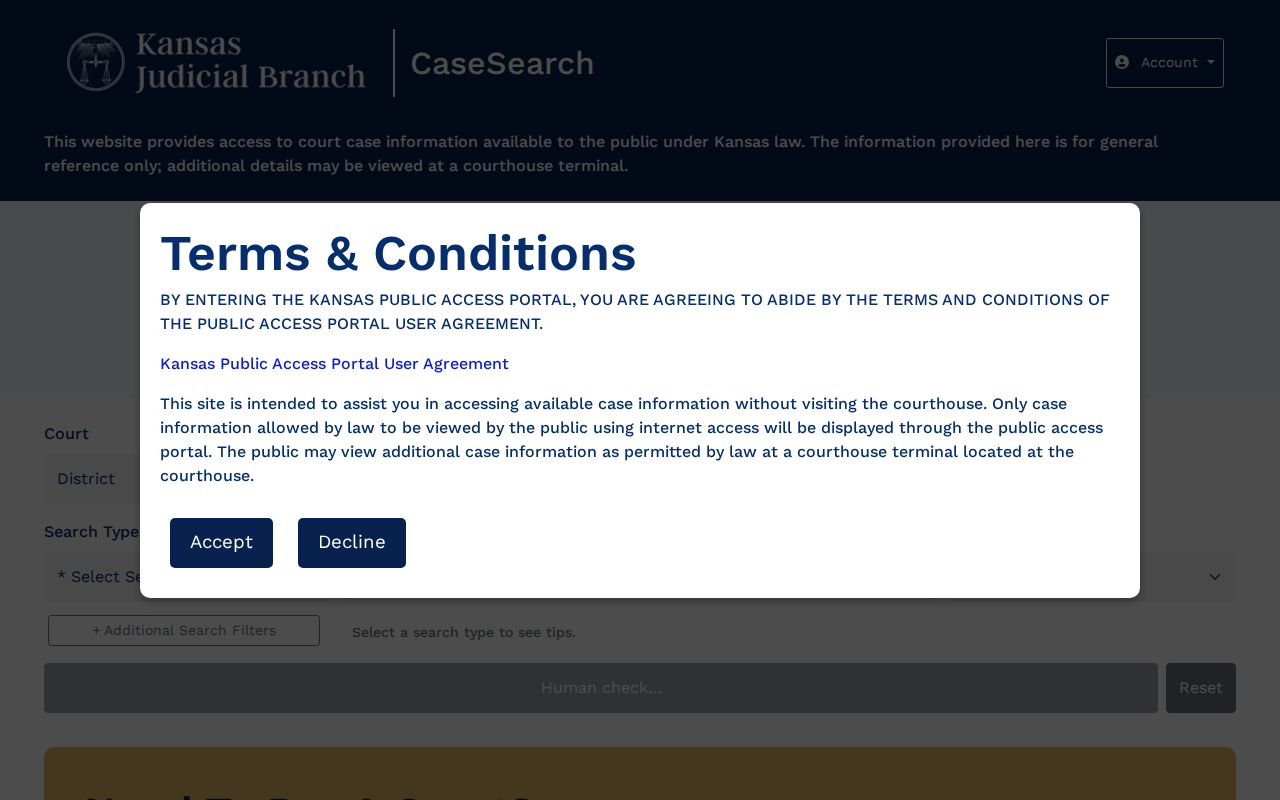
The capture identifies the official search environment, though live labels should be checked.
Two Ways to Search: Sedgwick County and State
The state portal handles remote district search once you select Sedgwick. Locally, the layer includes calendars, the daily docket, the courthouse terminal, clerks, and written requests. That local access can hand you a document the internet view omits.
| Kansas CaseSearch | Sedgwick County access |
|---|---|
| Searches public district or appellate case information. | Uses the DC18 terminal, calendars, daily docket, and Records Department. |
| Supports case, party, business, party-as-business, and citation modes. | Supports document inspection, archive retrieval, copies, and certification. |
| Best first step for a known available state case. | Best fallback for legacy items, missing images, and precise filings. |
| Does not contain federal cases or every municipal matter. | Municipal and federal clerks remain separate. |
Current Sedgwick County Search Interfaces
The live CaseSearch application holds the guest form used to inspect search types, filters, reset, and the human check.
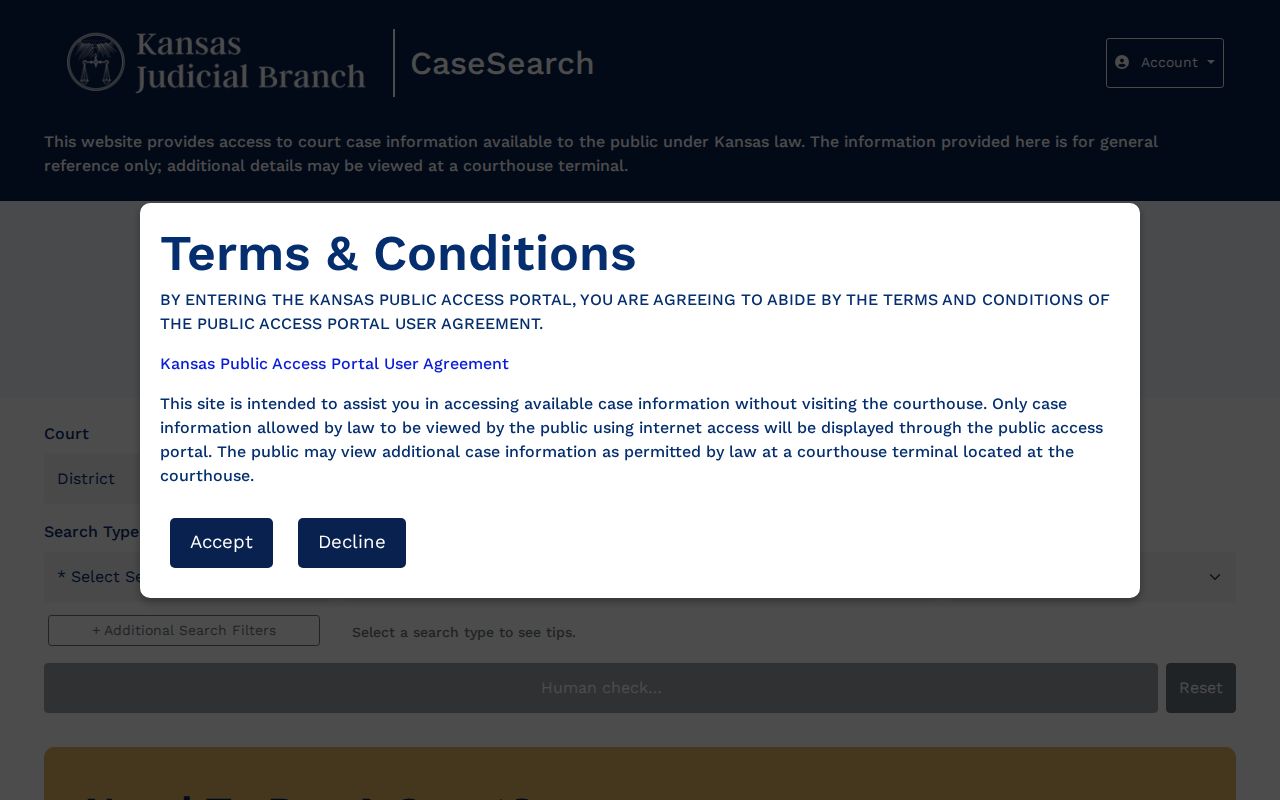
That layout shows why choosing Sedgwick and the right mode is part of the docket search itself. The Kansas eFlex portal displays the separate account-based filing environment.
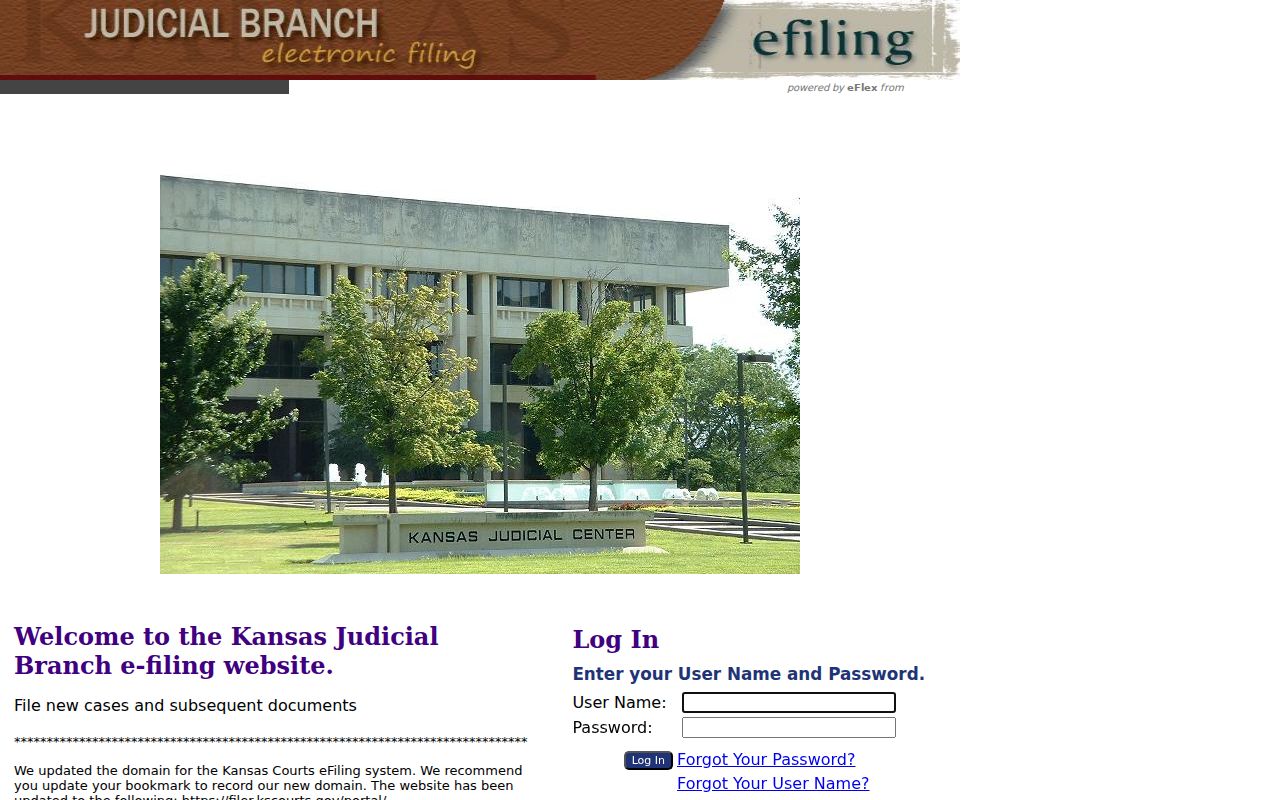
Keeping these systems separate prevents a public searcher from reaching the wrong login.
Federal Cases From Sedgwick County
Federal civil and criminal cases in Wichita run through the U.S. District Court for the District of Kansas. Those use PACER or CM/ECF rather than CaseSearch. Bankruptcy has its own clerk. A Sedgwick address alone never makes a federal case part of the Eighteenth Judicial District. The official PACER pricing page explains federal access and its charges.
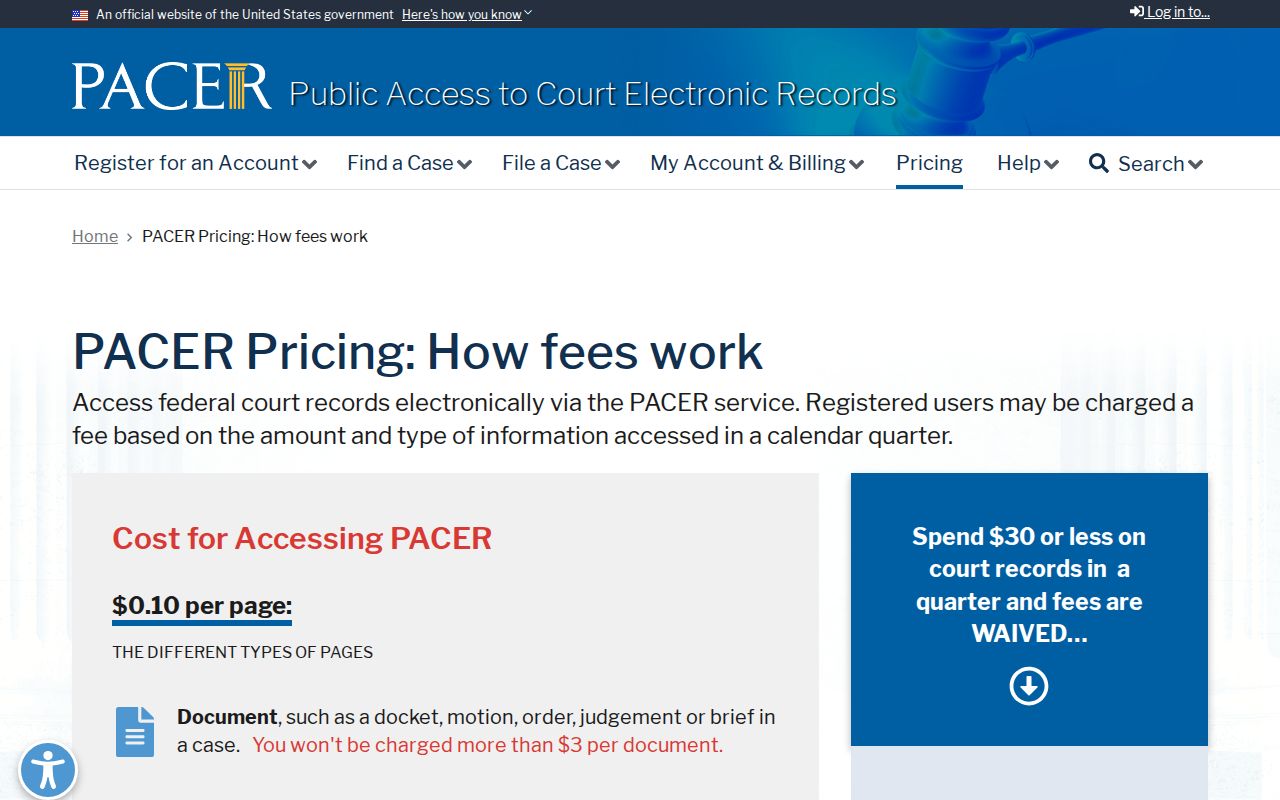
The separate source reinforces the jurisdiction check that belongs before a federal query.
Which Sedgwick County Cases Stay Restricted
What you can pull up at home is a smaller slice of what the law allows at the courthouse. Sealed files, protected data, expunged material, and certain restricted case types stay off the public internet. No search term changes that. DC18 bars public web users from the DM, PFA, PFS, JV, and JC categories. Adoptions, care-and-treatment files, investigative records, and anything sealed are barred too. A Legacy label on an entry usually means an older item was never converted for web viewing. The free Records terminal inside the courthouse can show more public material than the internet does. Confidentiality still holds either way. When you need one public document, send a written request, one per case, to 525 N Main, Wichita, KS 67203. Or email sg.micro@kscourts.gov, fax 316-941-5358, or call 316-660-5900. The clerk will walk you through the process but cannot offer legal advice.
Match your next move to whatever is missing. No image? Name the document and its filing date in writing. Missing hearing only? Check the departmental calendar and the filed notice before you ask for a whole file. A city citation belongs with that city's municipal clerk first. Juvenile and probate questions may route to 1900 E Morris. Ordinary Records access sits on the sixth floor at 525 N Main. Federal matters go to the federal clerk and PACER, not to any of these desks. These lines matter because each office can only search the files it keeps. They also keep a calendar result, a payment screen, a filing login, and a certified document from blurring into one product. When a court date is near, confirm with the assigned clerk instead of trusting a cached page or an old PDF.
Case type works as a diagnostic tool too. The guest search form lets you filter by Criminal, Civil, Family, or Probate or Mental Health. Pick the wrong type and a valid match can vanish. Leave the field open and you get a broad list you must sort through by case number, file date, and caption. Sedgwick County domestic cases carry the DM code, juvenile matters use JV or JC, and probate files commonly show PR. Those codes tell you why a result belongs with a specialized clerk. They do not loosen the access rules on the file itself.
District and Appellate are not the same collection. A Sedgwick County trial case belongs under District, with Sedgwick selected. An appeal belongs under Appellate. There the application warns that documents filed before March 13, 2025, are unavailable, and that some case types can drop out temporarily because of system configuration. A federal appeal fits neither route. It moves through the federal courts and PACER. Read the Court setting before you read a blank result, or you may mistake three separate systems for one database.
DC18 offers more than the case detail screen for current settings. Its Docket Information page refreshes every 15 minutes, and the site suggests browser Find or CTRL+F for a name. Department PDFs cover criminal, traffic, juvenile, civil, family, and probate calendars, plus prior hearing results, cases filed, and limited-action results. Use these reports to spot an event. They are not permanent certified registers. An entry like Hearing Held or Failure to Appear should be checked against the filed order or journal entry. Only then treat it as the court's final action.