
Sedgwick County Court Record Requests
Need basic public case information or an available image? Start with Kansas CaseSearch. Need a document, an archived file, certification, or authentication? That work belongs to the DC18 Records Department. Every request must be in writing, and each case number takes its own form. List the case caption and the document title. Add the file-stamp date if you know it, the number of copies, how you want delivery, and whether you need certification.
- Locate the case number through CaseSearch, a notice, or the clerk.
- Name the exact docket sheet, judgment, order, pleading, or other filing.
- Submit by email to sg.micro@kscourts.gov, by fax to 316-941-5358, by mail, or at the counter.
- Review the clerk's estimate and prepay when required.
- Confirm whether a plain, certified, raised-seal, or authenticated copy is needed.
Mail written requests to Clerk of District Court, Records Department, 525 N Main, Wichita, KS 67203. The main telephone is 316-660-5900. For inspection, Kansas CaseSearch and the free sixth-floor public terminal are the routes to use. A phone call can help with routing questions. It never replaces the written copy request.
The Sedgwick County Records Department
Bernie Lumbreras is the Clerk of the District Court named in the 2026 DC18 leadership material. For copy and certification work, the Records Department is where it happens in practice. The department sits on the sixth floor. Its clerks split duties by case category: Criminal on the seventh floor, Civil on the eleventh, Family Law at the main courthouse, Traffic at its assigned counters, and Juvenile and Probate at 1900 E Morris. The Records desk is the common stop. It handles docket sheets, public documents, archived searches, and reproductions for the whole courthouse.
District Court Records Department
Address: 525 N Main, 6th Floor, Wichita, KS 67203
Phone: 316-660-5900
Email: sg.micro@kscourts.gov
Fax: 316-941-5358
The clerk can walk you through request steps and charges. Interpreting an entry or telling you what filing to make is outside that role.
Kinds of Sedgwick County Court Records
Picking the right product up front saves research charges. Case information is public metadata: number, type, parties, judge, filing date, status, and settings. A docket sheet, or register of actions, is the dated activity history. The filed document is what sits behind an event. That could be a petition, complaint, motion, order, journal entry, judgment, transcript, or exhibit. A certified copy carries the clerk's certification. Authentication is a separate service. An archived record may need retrieval, since it was never converted into the current system. A calendar PDF or a Hearing Results row is not a filed or certified judgment. Do you need the court's actual ruling? Ask for the signed order or journal entry by name and date. For wider search context, the Sedgwick County docket search explains the statewide case-information layer.
Fields on a Sedgwick County Records Form
The fillable DC18 KORA form captures requester contact information plus a certification tied to K.S.A. 45-230. One form goes with each case number. That detail lets the clerk estimate a search accurately.
| Request field | What to provide |
|---|---|
| Requester details | Name, organization if any, street, city, state, ZIP, phone, and email. |
| Case identity | One case number and the case caption. |
| Document line | File-stamp date, document name, number of copies, and email choice. |
| Certification | Mark each document that must be certified. |
| Signature | Sign and date the statutory use certification. |
| Payment route | Mail or in-person method from the choices on the official form. |
Asking for "all records" can trigger staff research. Name the judgment, docket sheet, motion, or order instead, and the scope gets easier to price and fill.
Court Records: What They Contain
What's inside depends on the department and the case type. A public file may combine case metadata, the chronological register, and whatever filings the access rules permit. Not every field or image is guaranteed online.
| Header | Case number, filing date, district, judge or division, type, caption, and status when available. |
|---|---|
| Parties and counsel | Public party roles and attorney roles, subject to redaction and restrictions. |
| Entries | Date, event type, comment, and a document link when exposed. |
| Settings | Date, time, courtroom, judge, hearing type, and comments. |
| Outcome | Disposition or result and date, best confirmed in the signed judgment or journal entry. |
| Filed material | Petitions, answers, motions, notices, orders, judgments, transcripts, and other accessible documents. |
Free Viewing and Legacy Sedgwick County Files
A courthouse public terminal can show public information or documents that never reach the internet. That matters most when CaseSearch shows a Legacy marker. It also matters when an older converted file has no remote image. Viewing at the terminal is free. Printing, retrieval, certification, and staff research can each carry charges. The official DC18 Records page describes the local terminal and the request routes.
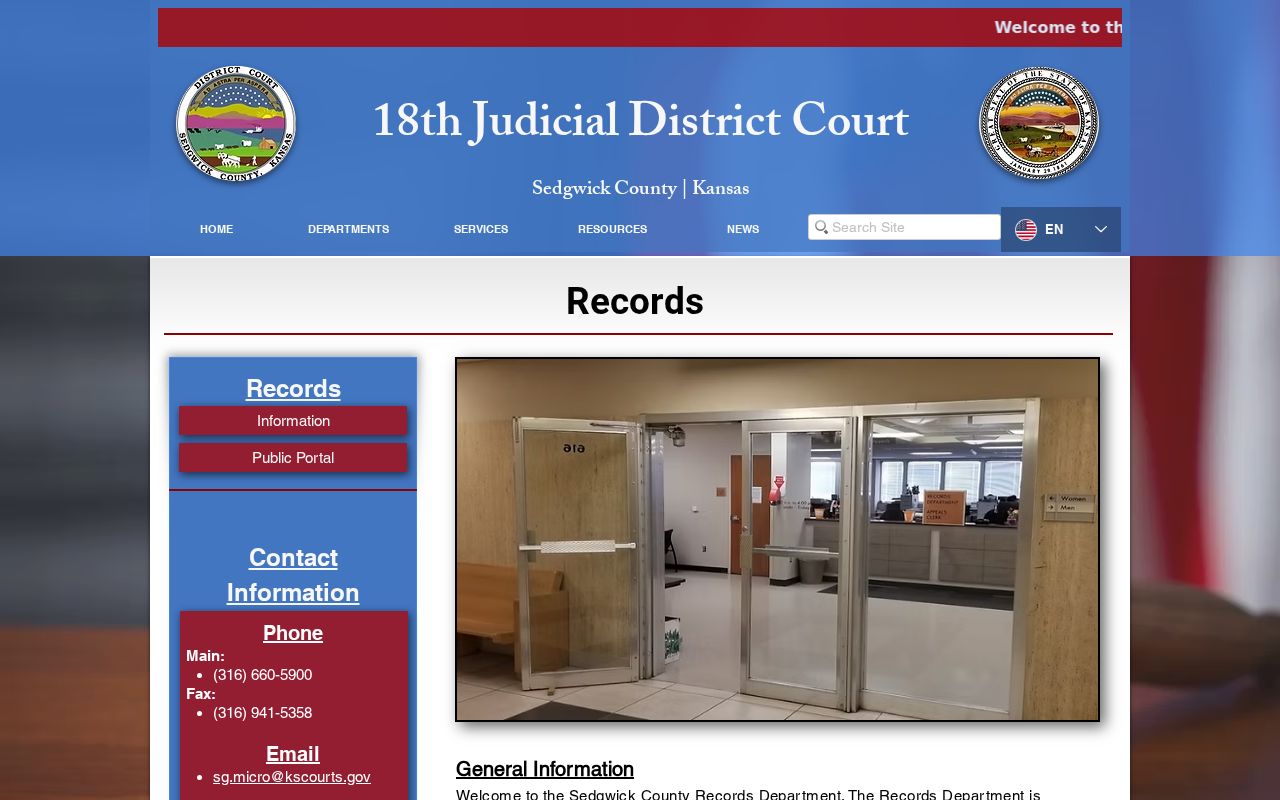
That page also warns that web information is not the official court record. That warning is exactly why a precise copy request matters.
Copy Fees and Certification
DC18 lists separate charges for reproduction, certification, authentication, retrieval, and research. The clerk gives an estimate and can require payment before any work begins. These charges stand apart from filing fees and other court-related assessments.
| Service | Listed amount |
|---|---|
| Plain printed copy | $0.25 per page |
| Emailed copy without research | No fee |
| Emailed copy with research | $20 per hour; quarter-hour minimum |
| First-Class mail | $0.50 per page for first five pages, then $0.25 per page |
| Certification | $10 per document; raised seal on request |
| Authentication | $5 plus copy fees |
| Document retrieval | $30 per case file |
| Preauthorized Records research | $20 per hour; $5 quarter-hour minimum |
| Preauthorized Professional research | $60 per hour; $15 quarter-hour minimum |
The official docket-fee page is the source for the current schedule.
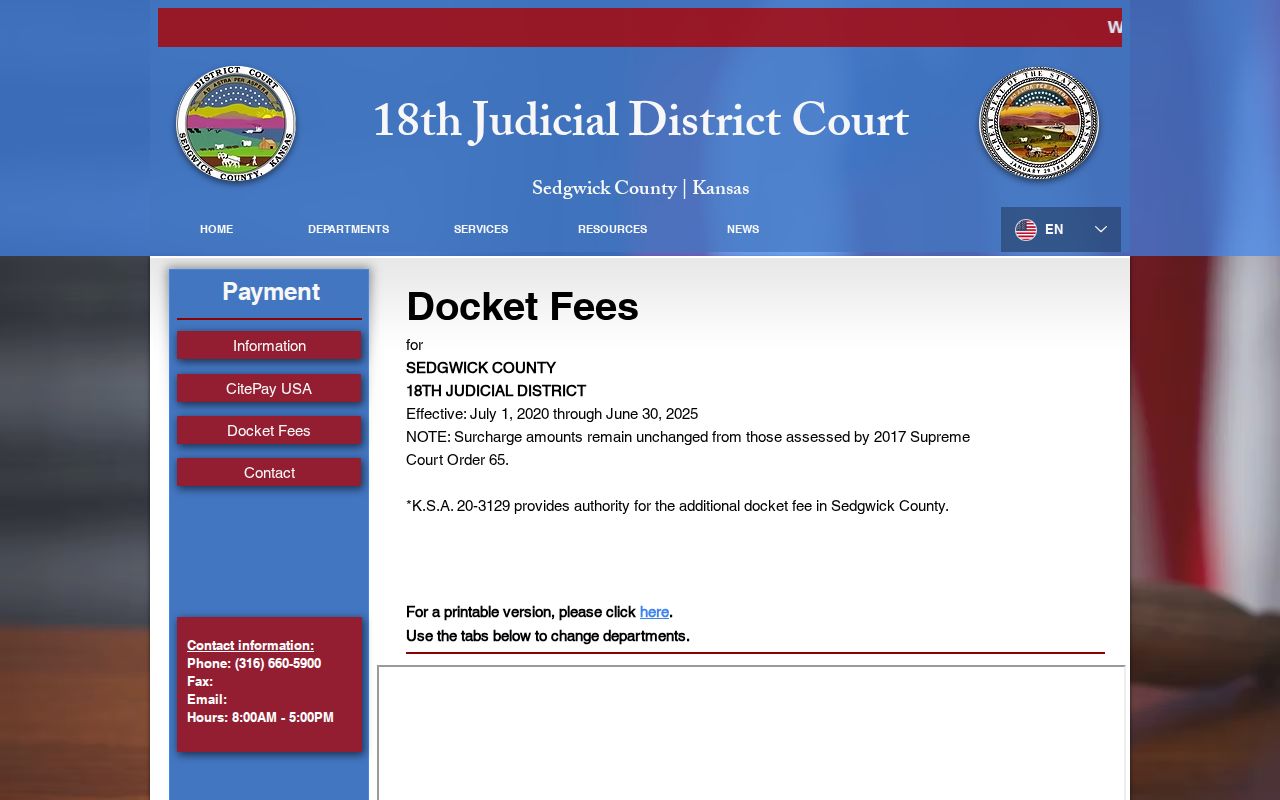
Confirm the total with the clerk, since your request scope and current rates control the estimate.
KORA and Sedgwick County Judicial Records
The Kansas Open Records Act, K.S.A. 45-215 through 45-230, shapes the request process. Even so, a state judicial record should not go by default to Sedgwick County government's Freedom of Information Officer. For an Eighteenth Judicial District case file, DC18 and its Records Department are the proper first route. K.S.A. 45-218 provides for inspection and a response, explanation, or delay notice within the statutory framework. It does not promise immediate production of every requested item. The request forms carry a certification. It covers restrictions on using lists of names and addresses for sale or solicitation. The forms also record when a request was received, provided, or denied, along with time and copy charges. When the recipient is not the custodian, K.S.A. 45-218(c) calls for routing information about the known custodian or location.
Federal Court Records in Wichita
Federal cases never land in the Eighteenth Judicial District's files. Federal civil, criminal, and bankruptcy matters belong to the U.S. District Court for the District of Kansas. The U.S. Bankruptcy Court sits there too, and both work out of the courthouse at 401 N Market. The state clerk has no hand in them. PACER is the system for federal electronic access. Each federal clerk keeps that court's own copies and archives. The official Wichita bankruptcy location page shows exactly where those separate federal records sit.
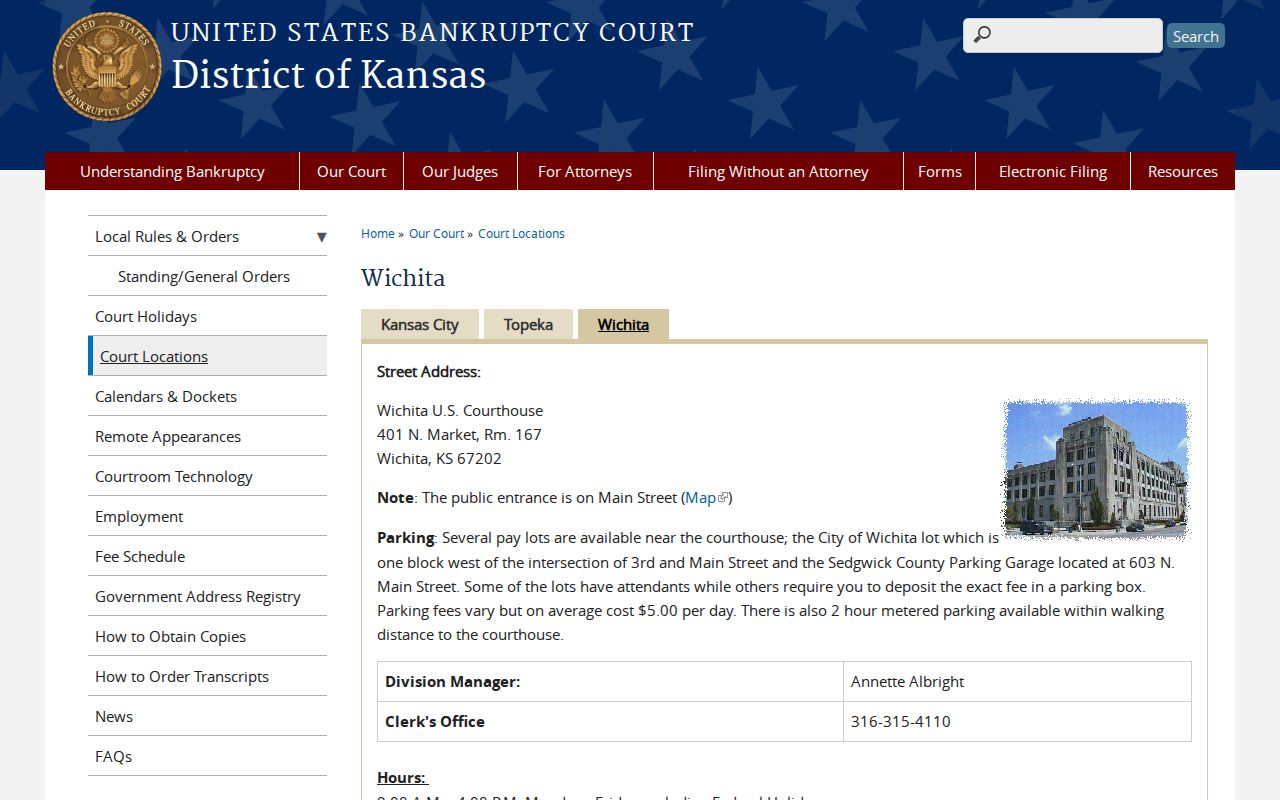
Sort out jurisdiction before you request a single page.
Access Rules for Sedgwick County Court Records
Public access stops where the law says stop. A sealing order, a redaction requirement, or a confidentiality statute always wins over a request. DC18 bars whole categories from the internet. Those include domestic relations, protection matters, juvenile offender and CINC cases, adoption, care-and-treatment, expunged files, and other sealed or restricted investigative material. None of that shows up online. Lawful courthouse channels may still yield some public information. But a terminal cannot open what a court order or statute has closed.
City case files live somewhere else entirely. Wichita, Derby, Haysville, Park City, and Bel Aire cases sit with municipal clerks. The county courthouse does not keep them. Law enforcement and criminal-history records sit with different offices too. A precise request names both the document and the office that holds it.
Department routing shapes what Records staff can pull. The Criminal Department holds felony, misdemeanor, fish-and-game, municipal-appeal, search-warrant, and inquisition material where access is permitted. Civil handles Chapter 60 cases, Chapter 61 limited actions, small claims, and transcripts. Family Law covers divorce, paternity, visitation, interstate, protection, and support filings. Juvenile maintains Juvenile Offender and Child in Need of Care matters. Probate keeps estates, guardianships, care-and-treatment, and adoption files. Two of those categories, care-and-treatment and adoption, are expressly confidential. Naming the department helps the clerk locate the right court record fast. It does not make every file open, though.
The request form wants precision, not a fishing expedition. It asks for a case number and caption. Then it offers line items for the file-stamp date, document name, certification choice, copy count, and email delivery. Want a judgment? Name the judgment or journal entry rather than writing "all records." Want the case history? Ask for the docket sheet or the register of actions. Broad wording costs you. It can mean research time, a bigger estimate, and delay. DC18 sends the estimate first and requires payment in full before staff fill the order.
Delivery and payment follow the channel you choose. The current Records page accepts email, mail, fax, and in-person submission. Mail payment can be a personal check, money order, or cashier's check. The form lists cash, card, and checks for the counter. Skip mailed cash, and ignore anyone selling an online payment route that does not exist. Small, non-archived counter requests are usually filled on the spot. Large or archived ones take staff work. K.S.A. 45-218 sets the response or delay-notice framework. It is not a promise that every copy arrives within three business days.